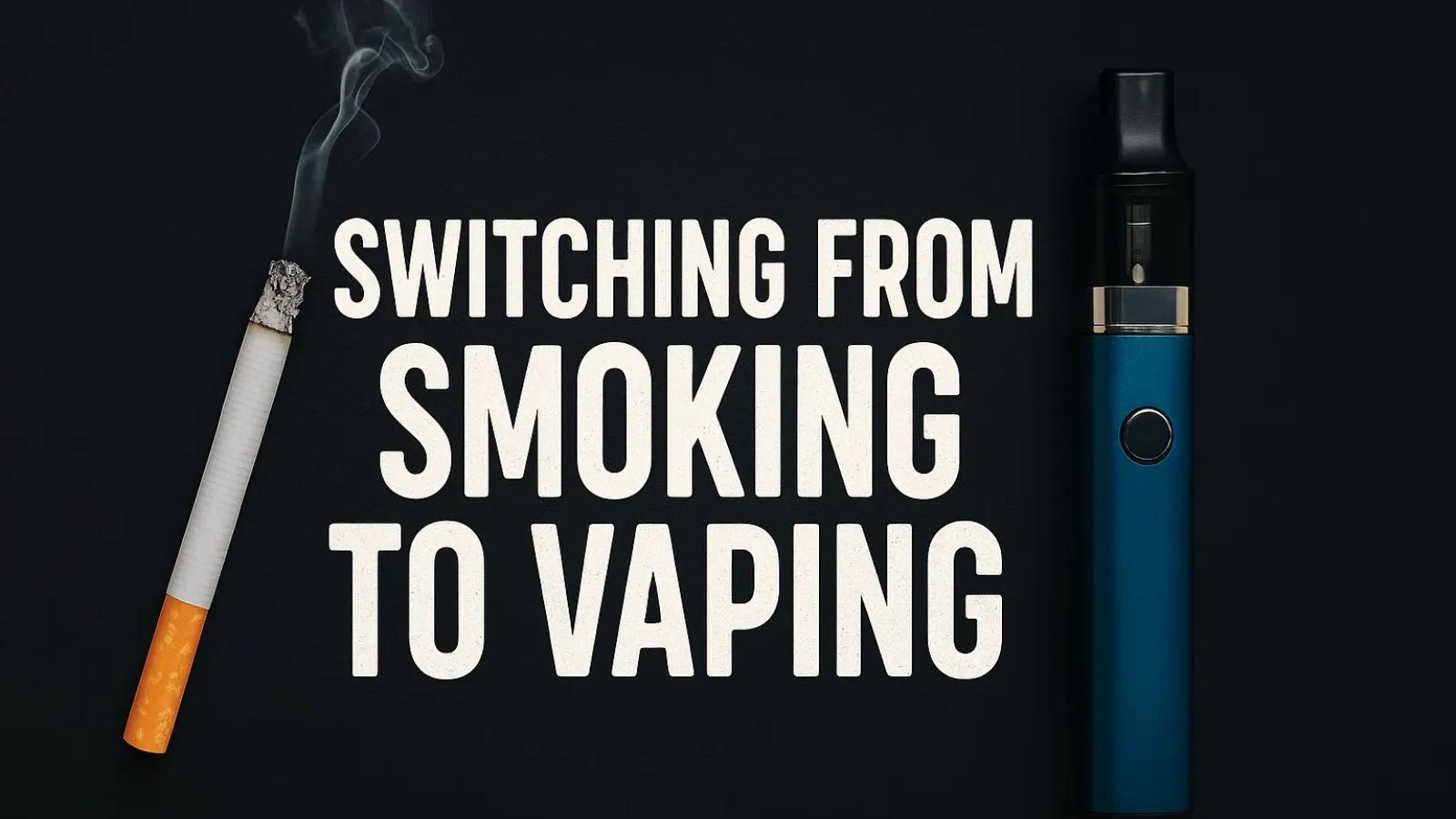
Understanding Why People Switch to Vaping
There are millions of smokers in the world who are seeking to quit. Many prefer vaping to the use of traditional cigarettes; this is because it can be done in a safer manner.
The lack of combustion is one of the reasons why vaping can be discussed as less harmful. The burning causes sticky substance and more than 4,000 harmful substances contained in cigarette smoke.
The substitution of vaping with burning tobacco smoke is due to the fact that the smoke produced by vaping is caused by vapour generated by heating of the e-liquid. Users who inhale vapes breathe heated, not burnt content, which is less dangerous by its nature.
Choosing the Right Beginner Vaping Device
The kind of the first vaping device that you select may influence your success in smoking cessation.
As you inhale, these devices will draw power on the battery and this will automatically turn on the coil. All you have to do is to breathe, the device does it automatically.
- Select draw-activated to experience a feel of cigarettes.
- Choose small and miniature forms to be convenient.
- Find inbuilt batteries in order to minimise maintenance.
- Give a premium to plain designs that have low learning curves.
- Pod systems can be considered as pre-filled.
- Do not use sophisticated mods that have many buttons at the start.
- Light and small gadgets are used to keep the hand-to-mouth motions of which smokers are accustomed.
Simple designs eliminate the learning curve and simplify the transition process.
Complex box modifications that have more than one button are to be avoided. Basic all-in-one kits allow one to quit smoking and start to use vaping.
| Type of Devices | User-Friendliness | Portability | Novice Friendliness |
|---|---|---|---|
| Disposable Vapes | Very Easy | Excellent | Yes - Perfect Start |
| Pod Systems (as Caliburn AK2) | Easy | Excellent | Yes - Recommended |
| Pen-Style Kits | Moderate | Good | Yes - Good Option |
| High-tech Mod Kits | Advanced | Simple | No - Too Advanced |
Selecting the Correct Nicotine Strength
Relapse can be prevented by locating the optimal amount of nicotine. Excessive nicotine will result in insatiable cravings, whereas excessive nicotine may make one feel nauseous, dizzy, or experience other adverse effects.
Salt nicotine is a fast acting nicotine simulating smoking. The reduction of nicotine may be achieved 2-4 weeks later when the cravings are less.
- Smokers (1+ packs per day): 18-20mg of nicotine salts are the initial amount.
- Average smokers (half pack a day): Initially, 12-15mg nicotine salts.
- Light smokers (less than one cigarette a day): Begin with 6-12mg nicotine.
- Observe the reaction of your body within one week.
- Cut nicotine by 20-30 percent after every 2-4 weeks provided one is comfortable.
- Upgrade in the case of strong cravings or irritability.
| Smoking Level | Recommended Starting Nicotine | After 4 Weeks | After 8 Weeks |
|---|---|---|---|
| Pack+ per Day (Heavy) | 18-20mg Salts | 12-15mg Salts | 6-12mg Freebase |
| Half pack per day (Medium) | 12-15mg Salts | 6-12mg Salts | 3-6mg Freebase |
| Light (Few Daily) | 6-12mg Salts | 3-6mg Salts | 0-3mg Freebase |
| Very Light (1-2 Daily) | 3-6mg Freebase | 0-3mg Freebase | Zero Nicotine |
Finding E-Liquid Flavours That Keep You Satisfied
The choice of flavours is a crucial one in order to remain devoted to vaping. Most of the ex-smokers begin with tobacco or menthol flavours since they are familiar to them.
Vaping can be fun and enjoyable by experimenting with the flavours of fruits, desserts and beverages. Diversity eliminates monotony, which is the usual cause of relapsing to cigarettes.
Discovering flavours that you like will make vaping more rewarding, and can greatly lower the desire to smoke.
- Menthol/Mint - Fresh and close to cigarettes.
- Fruity tastes - Sweet and refreshing.
- Dessert flavours - Rich and indulgent.
- Beverage flavours - Coffee, tea, and energy drinks.
After the first week, experiment to see which flavour you like the most.
Building Consistent Vaping Habits
As significant as nicotine replacement is a daily vaping routine. Your brain connects smoking to morning coffee, breaks, meals, or stress.
Vaping during these moments retrains your brain. Keep your device close and treat it with the same importance cigarettes once had.
Managing Cravings and Withdrawal
The initial 2 3 weeks are the most difficult. The body adapts to a new schedule and reduces consumption of cigarettes. Normal are irritability, difficulties in concentration, rise in appetite, and cravings.
Keeping your vape nearby allows you to respond to cravings immediately, reducing escalation and relapse risk.
Keeping your vape device will allow you to get a craving right away. This will avoid the escalation and decrease the risk of relapse.
- Drink plenty of water daily.
- Exercise regularly.
- Use gum or mints for oral stimulation.
- Breath deeply during cravings of intense nature..
- Use nicotine patches if needed.
| Symptom | Normal Timeline | Management Approach |
|---|---|---|
| Nicotine Cravings | Day 1-7 | Vape freely, raise nicotine in the meantime. |
| Irritability / Mood Swings | Day 2-10 | meditation, support calls |
| Focus Issues | Days 3-14 | Keep hydrated, rest, light exercise. |
| Sleep Disturbances | Days 1-10 | Do not vape before sleeping, follow routine |
| Increased Appetite | Weeks 1-4 | Light exercise, healthy snacks, water. |
Conclusion
It may be difficult in the initial weeks, but thousands of others are able to do this transition every day. Vaping is a good substitute to the bad effects of cigarettes
The path is not necessarily easy. It can be successfully used over the long-term with a proper device, strength of nicotine, and determination.